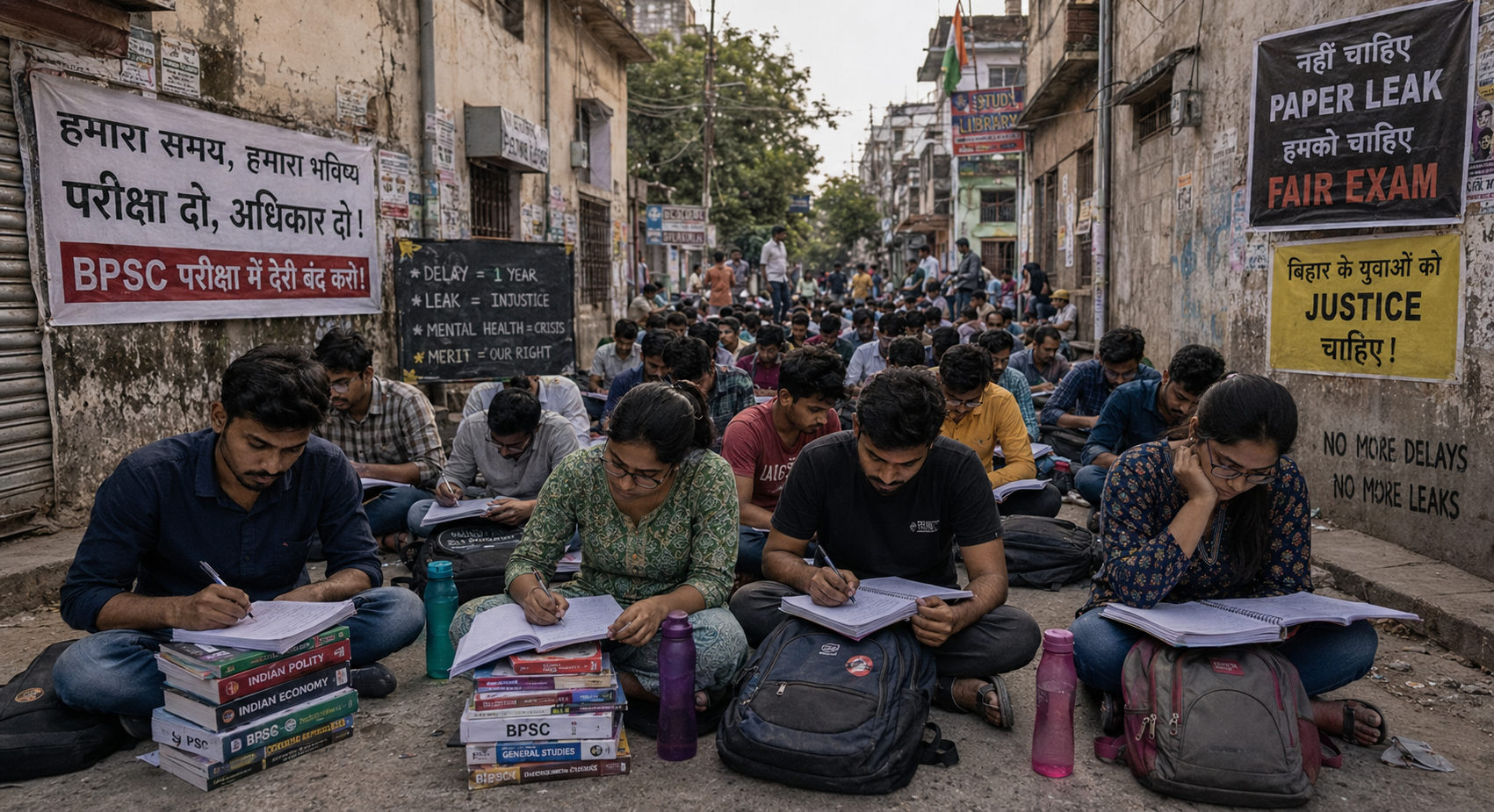
If you walk through the narrow lanes of Musallahpur Hat, Rajendra Nagar, or Kankarbagh in Patna early in the morning, you will witness a quiet, persistent sight. Groups of young men and women, carrying heavy bags packed with monthly magazine compilations and handwritten notes, make their way to local self-study libraries and study hubs.
They are Bihar’s competitive exam aspirants—a vital part of our state’s youth. They sacrifice sleep, family gatherings, personal lives, and mental peace for one primary goal: securing a stable government position through the Bihar Public Service Commission (BPSC) or state recruitment boards.
Yet, behind this fierce dedication lies a grim, systemic reality. The endless cycle of exam postponements, paper leak scandals, and prolonged litigation is quietly consuming the best years of our generation.
1. The Financial Strain on Working-Class Families
Preparing for BPSC isn’t just an intellectual test; it is an immense economic burden on families across our state.
-
Monthly Expenses: Renting a tiny room, paying library fees, buying study materials, and managing mess food costs anywhere between ₹6,000 to ₹10,000 every month in Patna or Delhi.
-
The Compounding Cost: When a 1-year recruitment process stretches into 3 or 4 years due to re-examinations or court stays, middle-class and rural families are forced to stretch their savings or take high-interest loans to keep their children afloat.
For a family relying on small-scale agriculture or a modest salary, every postponed exam date is a financial blow that directly delays a household’s progress.
2. The Mental Health Crisis Nobody Talks About
The most heartbreaking toll of BPSC delays isn’t measured in rupees—it is measured in psychological fatigue.
“When an exam gets cancelled or delayed after months of 14-hour study days, a part of your spirit breaks. You aren’t just restarting a syllabus; you are restarting your hopes from scratch.”
Gen Z Biharis live in a constant state of “suspended adulthood.” When recruitment cycles stall:
-
Age Limits Slip Away: Aspirants watch their eligible age window close without having had a fair shot in the examination hall.
-
Social Stigma: Returning home during festivals becomes uncomfortable due to persistent questions from relatives and neighbors.
-
Burnout & Anxiety: Chronic stress leads to severe depression and self-doubt, with very few mental health support networks available to help aspirants process the trauma of systemic delays.
3. The Threat to Meritocracy & Public Distrust
When paper leak allegations surface or exam centers report irregularities, it shatters the fundamental belief in meritocracy.
While legislative steps like anti-paper-leak bills are a step forward, laws alone cannot heal the trust deficit. When hard-working students see rumors of leaked question papers on social media, they wonder if pure merit is enough to compete against administrative oversights.
What Must Change: Our 3 Core Demands
As Gen Z Biharis, we are not asking for handouts. We are asking for a system that respects our time and dignity. We demand:
-
A Strict, Time-Bound Annual Calendar: BPSC must implement and strictly adhere to an uninterrupted, UPSC-style annual examination schedule.
-
Zero Tolerance & Total Transparency: Every exam center must maintain foolproof security, functional CCTV networks, and clear digital grievance mechanisms to ensure complete integrity.
-
Accountability for Delays: Fast-track administrative and legal procedures so disputes do not stall entire recruitment batches for years.
Have Your Say on GenZBihar.com!
This platform was created so that your story doesn’t stay hidden in a library cubicle.
-
Have you lost years to delayed exam notifications?
-
How are you or your family managing the financial and emotional toll of BPSC preparations?
Join the movement: Log in to your GenZBihar.com account, leave your thoughts in the comments below, or submit your own post (with photos or video clips from your study spots) to highlight ground realities across all 38 districts!